Home Builders in Hamilton Ontario: Multi-Unit Conversions, Legal Suites and Infill Development
11 March 2026
Why Hamilton Homeowners Are Finally Turning Basements Into Income Properties And What Stops Most of Them
30 March 2026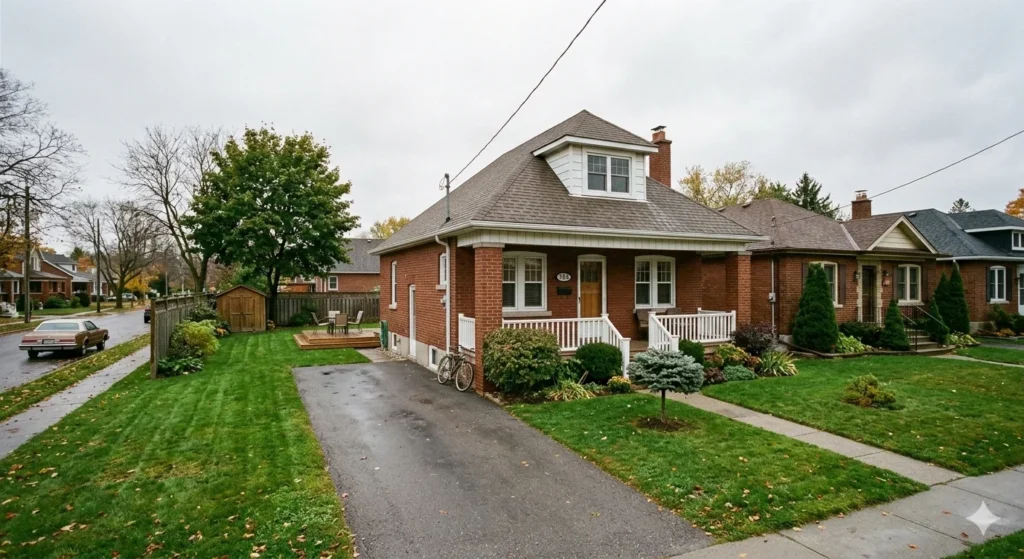
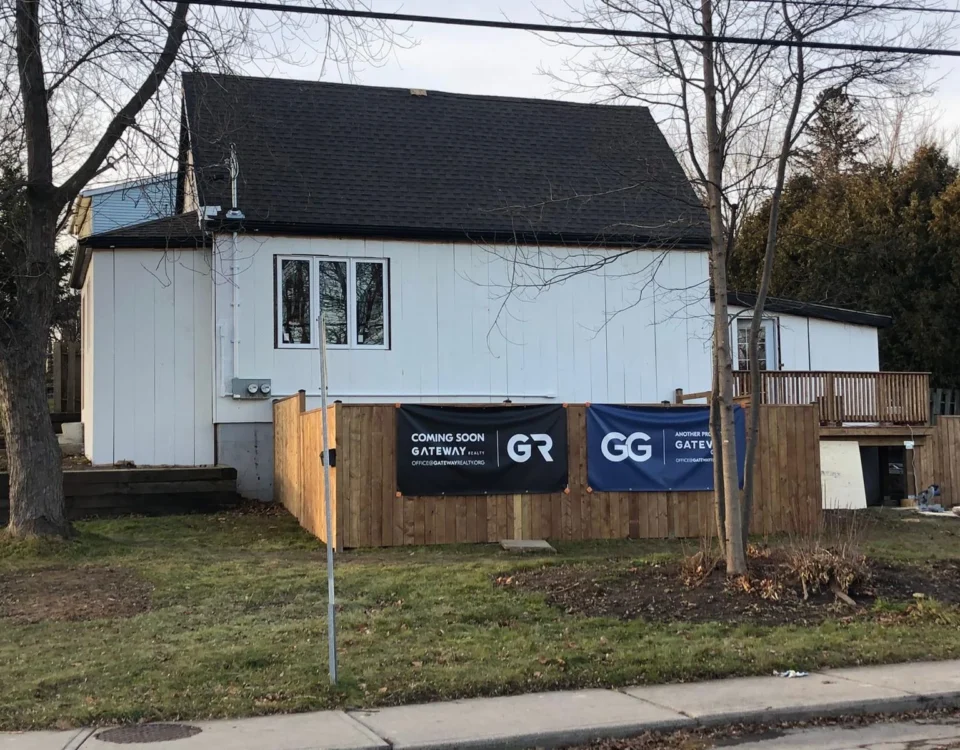
Most people walk through an older home in Hamilton and start adding up the problems. The kitchen is outdated. The wiring may need work. The basement feels dark, damp, and forgotten. So they price the house like a renovation project and move on. Gateway looks at the same house and asks a completely different question:
What can this property legally support?
That question changes everything. Because in Hamilton, the value of an older home is not just in what it looks like today.
It is in what it can become. A legal basement suite. A garden suite in the backyard. In some cases, two separate income generating units on a single lot without buying more land, without rezoning, and without a years long planning process.
This is not a pitch that every older home is a hidden opportunity. Some are not. Some have structural problems, tight lots, or basement conditions that make the numbers hard to justify.
But if you own or are considering buying an older detached home in Hamilton, the most important question is rarely:
“What does this house need?”
It is usually:
“What can this lot and structure support?”
Why Older Homes in Hamilton Are Being Looked at Differently
Hamilton’s housing market has changed a lot over the past few years.
Prices have come down from their peak. More homes are sitting on the market longer. Buyers have more choice and more room to negotiate than they did two or three years ago.
For sellers, that is frustrating.
For buyers who know how to look at a property the right way, it is actually a useful environment.
Here is why.
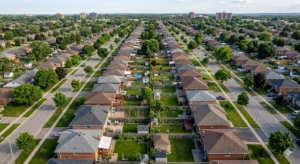
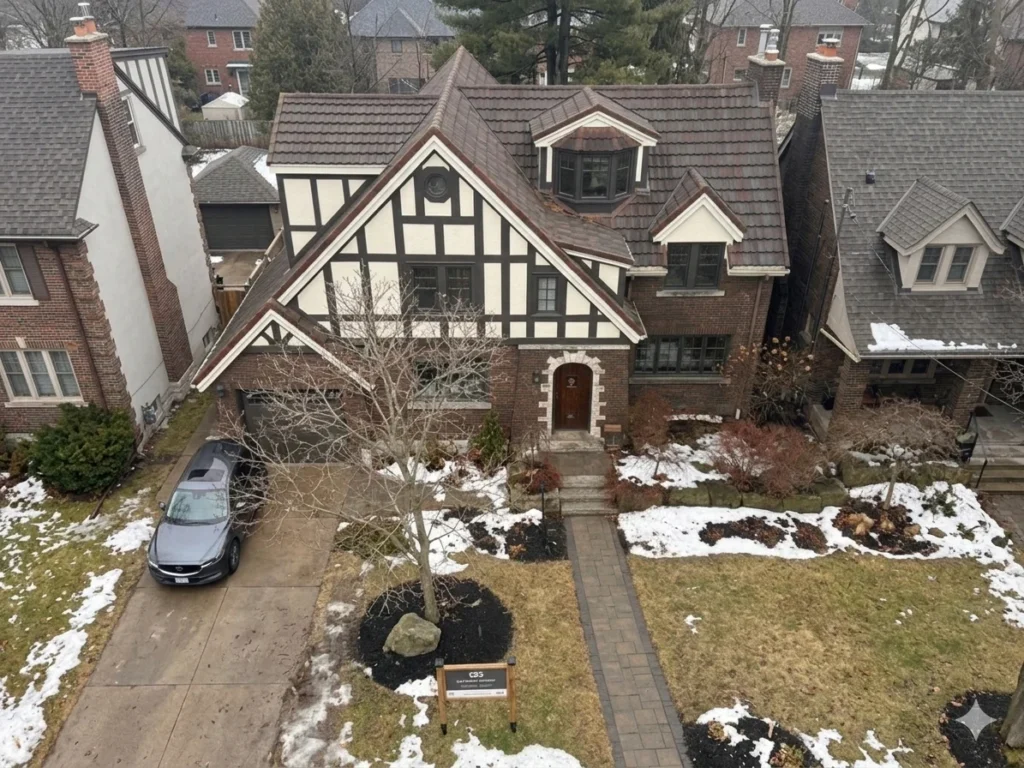
When a market slows down, older homes tend to get priced based on what they look like not what they can do. A tired bungalow in Crown Point or a dated two-storey in Stoney Creek gets listed as a renovation project. The seller is thinking about a buyer who will fix the kitchen and move in.
But that same property, evaluated for what Hamilton’s current zoning rules actually allow, might support a legal rental suite — or two.
That is a completely different way to value the same house.
There is another piece to this. Hamilton has a real shortage of affordable rental housing. Demand for basement apartments and smaller rental units has stayed strong even as the ownership market softened. A property that can legally generate rental income is worth more — both financially and in practical terms than one that cannot.
Prices have corrected. Rental demand is real. And the zoning that allows extra units has been in place since 2021.
That combination does not always line up this way.
What Makes Older Homes in Hamilton Different
When we say “older homes,” we mean properties built before about 1980.
- Crown Point
- Gibson
- Stipley
- Homeside
- Bartonville
- Dundas
- Older parts of Stoney Creek
- Parts of Hamilton Mountain
These homes were built in a different era.
And that era gave them physical characteristics that most newer homes simply do not have.
The lots are bigger.
Subdivisions built between the 1940s and 1970s used more land per home than what gets built today.
Deeper rear yards. Wider side yards. More room to work with.
That matters because lot depth is often what determines whether a property can support something beyond the main house — especially a detached unit in the backyard.
The houses are detached.
Most of Hamilton’s older stock is fully detached — the home stands on its own with side yards and clear rear yard access.
That matters because Hamilton’s rules allow a separate backyard unit only on lots with detached homes. If a house shares a wall with another one, that option is off the table.
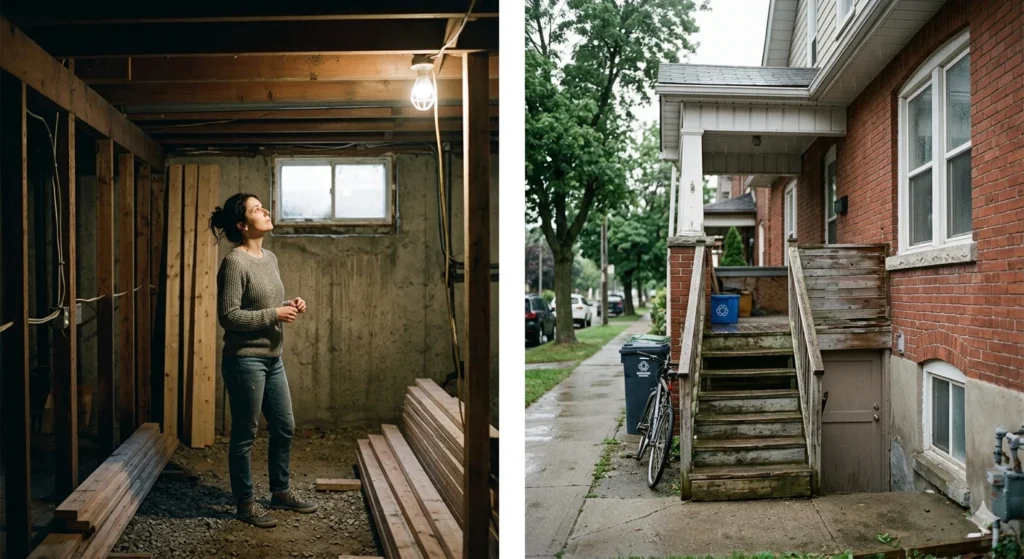
The basements are unfinished and that is useful.
Many older Hamilton homes have basements that have not been touched in decades.
That sounds like a problem. It is often an advantage.
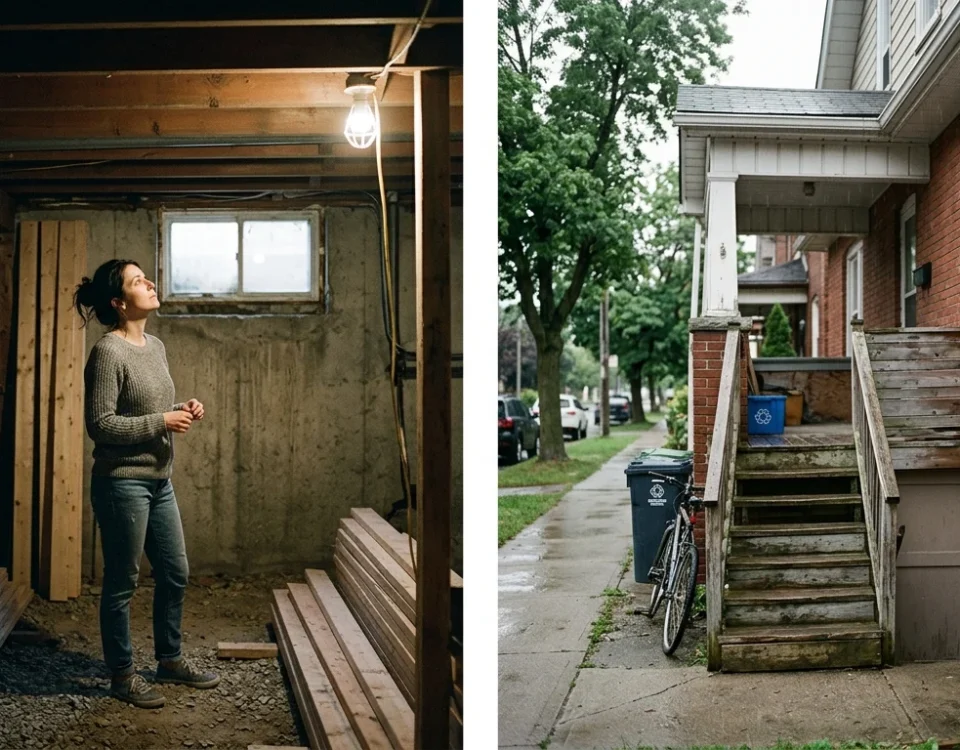
An unfinished basement is a blank canvas. It is usually easier and cleaner to assess, plan, and convert properly than a basement someone finished years ago without thinking about code requirements, fire separation, or proper exits.
Undoing amateur work costs more than starting fresh.
The ceilings are taller.
Older homes were built with less insulation in the foundation walls, which typically means the basement ceiling sits higher than it does in newer construction.
That matters because a legal rental unit requires a minimum ceiling height of 6 feet 5 inches throughout the living areas.
Many pre-1980 Hamilton homes clear that comfortably.
Many newer homes do not.
The layouts are simpler.
Post-war construction kept things straightforward. Walls are where you expect them. Floor plans are easy to read. That makes it much easier to plan a conversion without expensive structural surprises.
None of this makes every older Hamilton home a guaranteed opportunity.
But it explains why a 1958 bungalow on a 40-by-120-foot lot in East Hamilton often has more options than a newer townhouse sitting on a tight urban footprint.
The form matters. The lot matters. The era of construction matters.
What Hamilton’s Zoning Actually Allows
This is the part most homeowners do not fully understand — and it is important.
A lot of people still assume that adding a second unit means months of applications, rezoning hearings, and fighting the City for permission.
In many cases, that is no longer true.
In May 2021, the City of Hamilton changed its zoning rules to permit Additional Dwelling Units — often called ADUs — across most residential zones in the city.
In plain language, here is what that means for a standard residential lot in Hamilton:
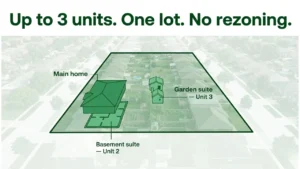
You can have up to two units inside the main house. For example: a basement apartment, plus a converted upper suite.
You can have one separate detached unit in the backyard. A garden suite. A small backyard home. A converted garage apartment.
That is three separate self-contained homes on one residential lot. No rezoning required for most properties. A building permit — not a planning application.
The City even has a dedicated team that handles ADU building permit applications specifically. The process is real and established. It is not a loophole or a grey area.
Hamilton has also put financial programs behind this direction.
The City’s ADU incentive program offers forgivable loans to homeowners who build rental units that meet specific affordability criteria. A forgivable loan means the money does not need to be paid back if you meet the conditions which typically involve renting the unit at or below a certain rate for a set number of years.
Not every project qualifies. Eligibility depends on your property, the unit type, and how you plan to rent it. But the programs exist, and many homeowners who could benefit from them have never heard of them.
Renovation Thinking vs. Property Thinking
Most people look at an older home like this:
The kitchen needs updating. The windows need replacing. The basement needs finishing. The whole place needs work.
That is renovation thinking. It is not wrong. But it is incomplete. Property thinking asks different questions:
Can the basement become a legal suite? Does the lot support a detached unit in the backyard? Is there room for a separate entrance? Can this property generate rental income that changes how much it costs to own it every month?
Here is a simple illustration of why that matters.
Imagine two buyers looking at the same older home in East Hamilton.
Buyer A sees a renovation project. They plan to update the kitchen, refresh the bathrooms, and sell in a few years for more than they paid. That is a reasonable plan.
Buyer B asks the property question first. They confirm the basement has enough ceiling height for a legal suite. They check whether the rear yard is deep enough for a garden suite. They find out that both are possible on this lot.
Both buyers paid the same price.
But Buyer B is now looking at a property that can generate rental income from two units — income that offsets carrying costs every month and changes the long-term value of the asset entirely.
Same house. Same street. Different question asked before purchase.
That is the difference.
Why Most Homeowners Never Think About This
If you already own an older home in Hamilton, you may be sitting on exactly this kind of potential and never have considered it.
That is not carelessness. It is just that this information is not front and center for most people.
Here is what tends to get in the way.
Zoning sounds more complicated than it usually is.
People hear “zoning” and assume the answer will involve months of applications, public hearings, or fighting with the City.
For most standard Hamilton lots under the 2021 ADU rules, that is not the process.
You need a building permit. Not a rezoning. Not a variance application. A building permit — the same category of approval you would get for a significant renovation.
The City has a specific team for it. The pathway is real.
Renovation quotes and feasibility reviews are completely different things.
A renovation contractor looks at a basement and thinks about drywall, flooring, and pot lights.
A builder who works on legal suite conversions looks at ceiling height, fire-rated separation between units, egress windows in every bedroom, and where a separate entrance can go.
Those are different conversations. Most renovation quotes never raise the second one — not because it is impossible, but because it is outside the scope of what that contractor is offering.
The financial comparison never actually gets made.
Most homeowners thinking about a renovation get quotes, compare them to an estimated resale bump, and decide whether to proceed.
Almost none of them run the comparison that asks: what would this unit rent for, what does it cost to build it properly, and how long before that pays for itself?
That comparison has very different numbers than the renovation one.
The feasibility conversation happens too late.
We speak regularly with homeowners who spent money on cosmetic renovations before anyone told them the property could have supported a legal rental suite.
The suite would have paid for itself. The renovation added a fraction of that value.
The order of decisions matters more than people realize.
What Gateway Looks At During a Property Assessment
When Gateway looks at an older Hamilton property, the starting point is not finishes or design.
It is feasibility.
That means working through a specific set of questions before anything else.
How deep is the rear yard?
Hamilton requires a detached backyard unit to sit a minimum of 4 meters from the main house, and at least 1.2 meters from the side and rear lot lines.
In practice, that means you need enough usable backyard depth for a structure to fit once those setbacks are respected.
We measure this first because it immediately opens or closes the garden suite option.
What is the zoning?
Most Hamilton residential lots allow ADUs under the 2021 rules.
A few do not particularly properties within the Niagara Escarpment Plan area, which requires a separate approval process. Some secondary plan areas have their own specific rules.
We confirm the designation before anything else moves forward.
How tall is the basement ceiling?
We measure at the lowest point accounting for beams, pipes, and any ductwork running through the space.
The minimum for a legal rental unit is 6 feet 5 inches throughout habitable areas.
If a basement falls short of that, raising the floor or lowering the slab is possible but adds significant cost before any conversion work even begins.
Is there a separate entrance or can one be created?
Every legal suite needs its own door to the outside, separate from the main entrance of the house.
Many older Hamilton homes already have a side door or rear door that can serve this purpose. Where one does not exist, we assess what creating it involves.
Do the bedrooms have proper escape windows?
Every bedroom in a basement suite needs an egress window — one large enough for a person to climb out of in an emergency, and for a firefighter to get in.
Existing basement windows often do not meet the required size. We check whether the exterior walls can accommodate the upgrade.
What is the water service situation?
If someone is building a detached garden suite, the City requires a water service assessment before issuing the permit.
If the existing water line is too small to supply two units, it needs to be upgraded before construction. That upgrade can cost anywhere from ten to forty thousand dollars and it almost never shows up in early contractor conversations.
Finding this out before committing to a design saves a lot of painful recalculation later.
Is there anything structurally wrong that changes the numbers?
Foundation problems, ongoing water getting in, wiring that needs to be fully replaced, load-bearing walls in inconvenient locations — all of these affect what a project actually costs.
We are straightforward about this. A property that needs significant structural remediation before conversion work starts is a different financial situation than one that does not.
The whole point of doing this first is simple.
No one should spend money on design or construction before knowing whether a project actually works — physically and financially.
The Homes Worth Looking At and the Ones That Usually Are Not
Not every older Hamilton home is a good conversion candidate.
Part of doing this work properly is being willing to say that clearly.
Homes that tend to work well usually have:
A detached form with side yards and rear yard access. A basement ceiling height at or above 6 feet 5 inches. A lot depth with enough backyard room after setbacks. An existing side or rear entrance, or wall space where one can be added. No major structural problems. Zoning that permits ADUs without special conditions.
Homes that need more caution often have:
Very narrow lots where setback requirements make a backyard unit physically impossible. Basement ceiling heights under 6 feet that would need costly floor or foundation work. Major structural issues — significant foundation movement, persistent water damage, or electrical systems that need complete replacement. A purchase price that already reflects the development potential, leaving no room for the conversion costs to make financial sense.
Some people already know what their property can support. They have priced it accordingly. If you buy at that price and then spend on the conversion, the return may not be there.
The opportunity is in properties being priced as simple renovation projects when they should be evaluated as small development sites.
That gap is what we look for.
Where This Tends to Show Up in Hamilton
Hamilton’s older housing stock is spread across the city.
But the properties that come up most often in these conversations share a common profile: pre-1980 construction, detached form, full basement, and a lot with real depth.
That profile shows up most frequently in:
East Hamilton, Crown Point, Gibson, Stipley, Homeside, Bartonville Most of the housing here was built before 1980. Detached bungalows and older two-storeys on standard or deeper lots are common. Prices in these areas still tend to be more accessible than other parts of the city, which matters — it leaves room for the conversion costs and still produces a return.
Dundas Dundas lots tend to run deeper than the urban core. That is a function of how the town was laid out before amalgamation. More rear yard depth means more options for detached backyard units.
Stoney Creek, older sections east of Centennial Parkway The pre-amalgamation Stoney Creek housing stock, particularly bungalows from the 1950s and 1960s, follows the same physical pattern. Larger lots, detached homes, full basements.
Hamilton Mountain, Centremount, Balfour, and older Mountain sections Older Mountain properties on larger lots share the same structural logic. Detached, full basement, enough lot depth to work with.
The common thread is not style or era. It is land pattern and building form.
What a Realistic Financial Picture Looks Like
This section is intentionally straightforward.
Every property is different. Costs vary. Timelines vary. What a unit rents for depends on size, location, and quality of finish.
But to give you a sense of what a real project involves:
A basement suite conversion typically costs anywhere from $80,000 to $150,000 depending on the condition of the existing basement, how much structural or servicing work is needed, and the level of finish.
That is not a small number.
But a legal basement suite in Hamilton, rented to a tenant at market rates, generates meaningful monthly income. Over time, that income offsets the cost of the project — and continues to generate returns long after the conversion is paid for.
The payback period depends on the specific numbers for each property. Some projects pay back faster. Some take longer. A proper feasibility review gives you those numbers before you commit.
The rental income potential is higher than a basement suite, and the tenant privacy is better, which often supports a stronger rent. But the upfront cost and timeline are both greater.
Not every property can support one. And not every budget makes it viable even when the property technically allows it.
Building both a basement suite and a garden suite on the same lot is possible on the right property. Hamilton’s rules allow it. But it is a larger project in every respect: more planning, more cost, longer timeline, and more moving parts.
Whether it makes sense depends entirely on the specific property and the owner’s financial situation.
The City’s financial programs can help.
Hamilton offers forgivable loans to homeowners who build ADUs that meet certain affordability criteria.
If you qualify, it can meaningfully reduce the out-of-pocket cost of a project.
If you do not qualify because of how you plan to rent the unit or the rent you want to charge — the project may still make financial sense. It just means funding the full cost yourself.
Either way, finding out early whether you qualify is worth doing.
The point of this section is not to make the numbers look easy. They are not always easy.
It is to make clear that the financial picture is real, knowable, and worth understanding before any other decision gets made.
Frequently Asked Questions
Can I add a second unit to my older Hamilton home without going through a rezoning process?
For most properties, yes. Hamilton’s 2021 zoning changes allow additional units on most standard residential lots without a rezoning application or a committee of adjustment hearing. What you need is a building permit which is a different, more straightforward process. The exceptions are properties within the Niagara Escarpment Plan area, which need additional sign-off, and certain properties within secondary plan areas with their own specific rules. Checking your property’s designation takes about ten minutes on Hamilton’s online mapping tool.
How many units am I actually allowed to have on one residential lot in Hamilton?
Up to three. Hamilton allows two units inside the main house for example, a basement apartment and an upper-floor suite plus one separate detached unit in the rear yard, such as a garden suite. All three require building permits and must meet the Ontario Building Code and Hamilton’s specific ADU requirements.
What makes a basement suite “legal” in Hamilton?
Several things and each one matters. The ceiling throughout the living areas needs to be at least 6 feet 5 inches. Every bedroom needs an egress window large enough for a person to climb out of in an emergency. The walls and ceiling separating the suite from the rest of the house need to be fire-rated. The suite needs its own entrance to the outside. It needs a full kitchen with plumbing, a complete bathroom, and its own electrical panel. Smoke and carbon monoxide detectors need to be linked to the rest of the house. An informal “finished basement” that someone is currently renting out informally does not meet these standards. It is a liability at resale not an asset.
Are there any financial programs in Hamilton that help cover the cost of building an ADU?
Yes. The City of Hamilton has an ADU incentive program that offers forgivable loans for homeowners who build rental units meeting specific affordability criteria. The loan is forgiven — meaning you do not repay it as long as you meet the conditions over the loan term, which typically involves renting the unit at or below a set rent threshold. There is also a secondary suite program with a separate forgivable loan structure. Not every project qualifies. The eligibility criteria involve the type of unit, the intended rent, and whether the property is your primary residence. But for projects that do qualify, the programs are real and genuinely reduce the upfront cost.
Will my property taxes go up if I add a legal suite?
Possibly. Property assessments in Ontario are handled by MPAC, which considers a property’s income potential as part of its assessed value. Adding a legal suite may increase your assessment and therefore your annual taxes. The increase is usually modest relative to the rental income the suite generates, but it is worth factoring in. Speaking to a property tax professional before you start is a good idea so you are not caught off guard.
How long does a basement suite conversion actually take from start to finish?
Roughly four to eight months for most properties. The main stages are: assessment and design, which takes four to eight weeks; building permit review by the City’s ADU team, which takes four to twelve weeks depending on how complete your application is; construction, which takes two to four months; and final inspection and occupancy sign-off. The permit stage is where most projects slow down. Applications that are missing information get sent back for revisions, which adds weeks. Working with someone who has been through Hamilton’s ADU permit process specifically not just a general contractor makes a real difference to the timeline.
Can I build a suite for a family member instead of renting it to a stranger?
Yes. There is no rule requiring the unit to be rented to someone unrelated to you. Many homeowners build suites specifically to house aging parents, an adult child, or another family member. The physical requirements are the same either way — a legal suite is a legal suite regardless of who lives in it. The one difference is that the City’s forgivable loan programs typically require the unit to be rented to an eligible tenant at or below market rent. If you are building for family use, you can still do it you just will not qualify for those financial programs.
What is the difference between a secondary suite and a garden suite?
A secondary suite is inside the main house most commonly in the basement, but it can also be on an upper floor or a converted main-floor area. It shares a building with the rest of the home but has its own entrance, kitchen, bathroom, and living space. A garden suite is a completely separate structure in the rear yard. It is its own building, unconnected to the main house. Both are types of Additional Dwelling Units under Hamilton’s zoning rules. Both require building permits. The main practical differences are cost, timeline, privacy, and how much rear yard space you have available.
What if my property does not qualify — is the conversation still worth having?
Yes. Knowing what your property cannot support is just as useful as knowing what it can. It stops you from spending money based on assumptions, and it helps you make better decisions about renovation, refinancing, or future purchase. A straightforward answer even a no is more valuable than spending months planning something that was never going to work.
The Question Worth Asking First
Older homes in Hamilton are often judged too quickly.
People see the age. They see the work. They see the inconvenience.
What they do not always see or ask about is what the lot can support, what the basement can become, what access already exists, and what the zoning actually allows.
That is not about ignoring the condition of the house.
Condition matters. Structural integrity matters. The numbers have to work.
But condition is not the whole story.
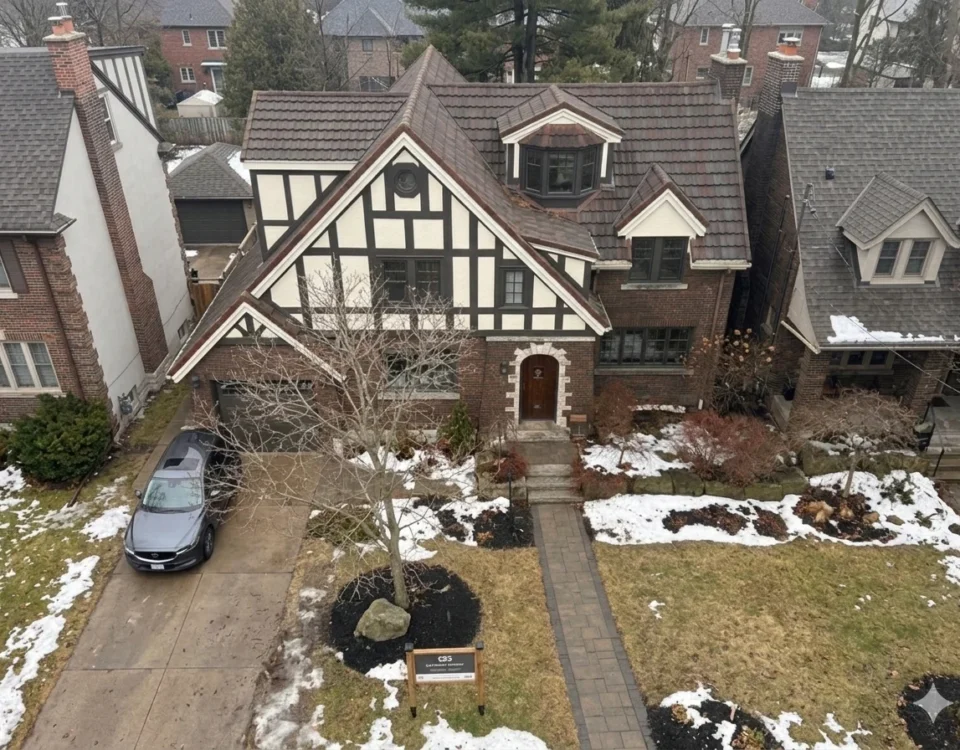
A house that looks rough and needs work but sits on a deep lot, has a 7-foot basement, and is detached with rear yard access is a different asset from a pristine home on a narrow lot with a 5-foot basement.
The first one has options. The second one may not.
That difference does not show up in the listing photos.
It shows up when someone asks the right question before anything else.
Talk to Gateway Before You Renovate
If you own an older home in Hamilton or you are thinking about buying one the most useful first step is understanding what the property actually supports.
Not what you want it to support. Not what it looks like it might support. What it actually, specifically, measurably supports under current Hamilton rules.
Gateway reviews the lot, the basement, the zoning, the access, and the servicing.
We tell you what is possible, what it is likely to cost in broad terms, and whether the project makes practical sense.
If it does, you will know that clearly before spending anything.
If it does not, we will tell you that too and explain why.
There is no cost for the initial review.
Contact Us
We will tell you what we see.
Gateway Group | Hamilton, Ontario
Basement suites · Garden suites · Multi-unit conversions · Infill development