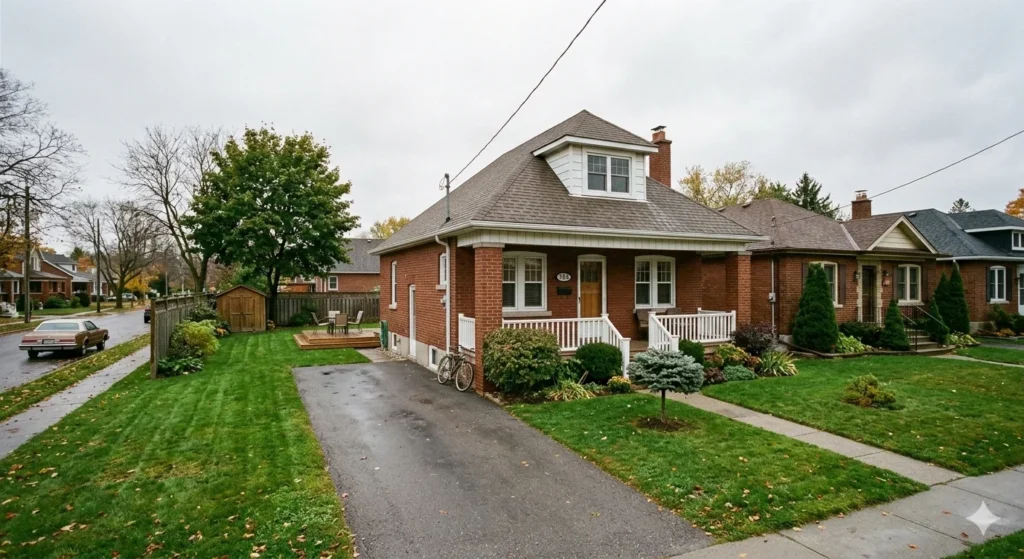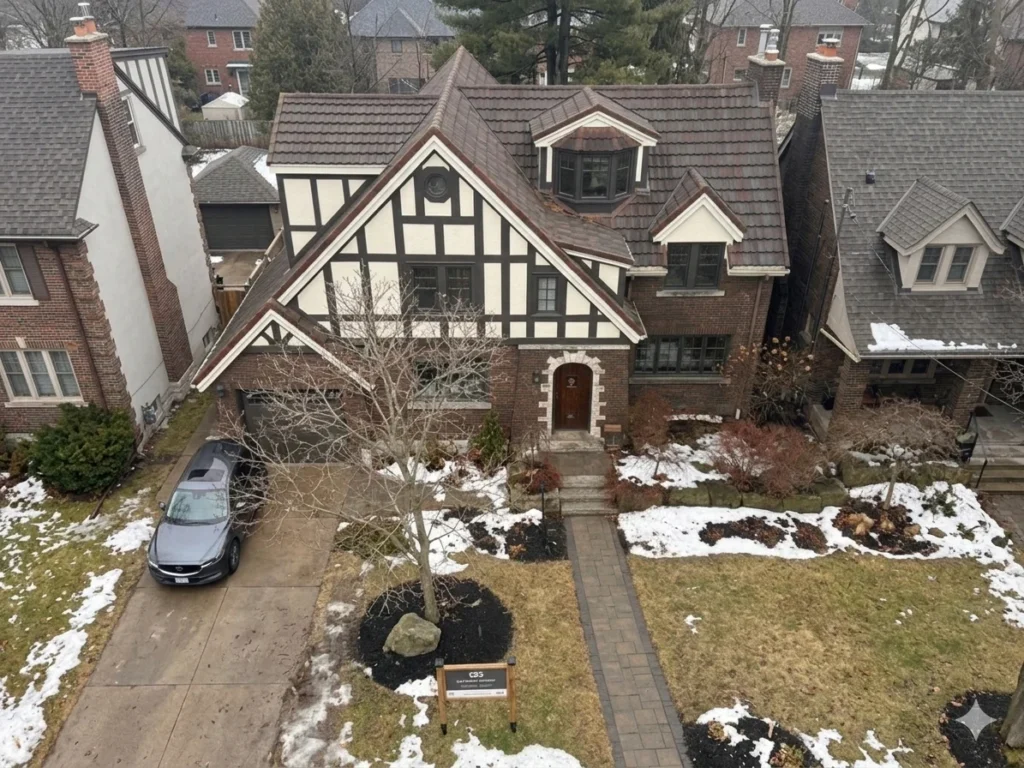
The Real Reason Hamilton’s Older Homes Are More Valuable Than People Think
24 March 2026
Hamilton’s $40,000 ADU Grant Explained: What It Actually Covers, Who Qualifies, and How to Get It
9 April 2026Why Hamilton Homeowners Are Finally Turning Basements Into Income Properties And What Stops Most of Them
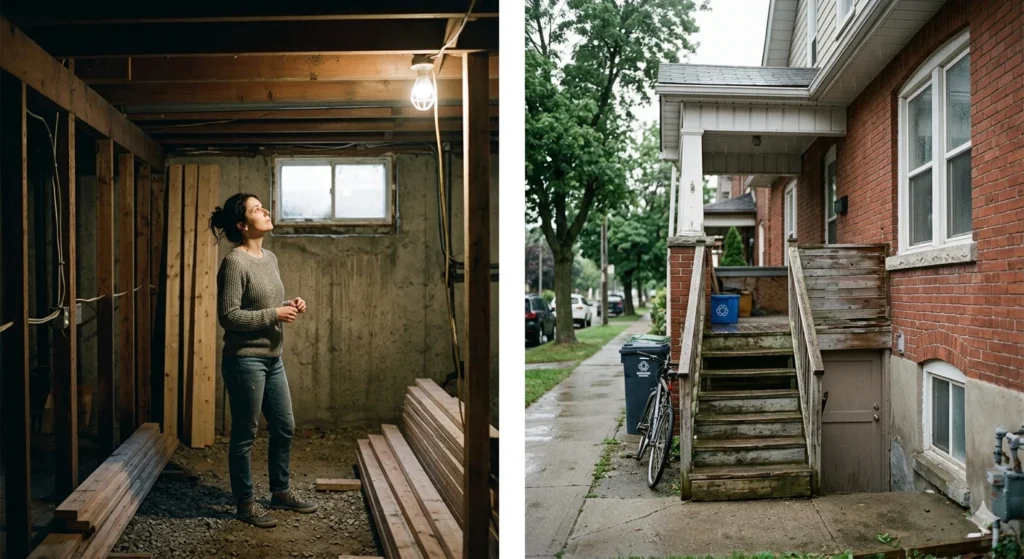
You’ve thought about it. Maybe more than once.
The basement sits there unfinished, underused, costing you nothing and producing nothing while the monthly cost of owning in Hamilton keeps quietly climbing. Property taxes up. Mortgage renewals at higher rates. Insurance. Utilities. The carrying cost of your home has grown in ways that didn’t feel dramatic month to month but add up to something real.
And you know what a basement suite could do. You’ve done the rough math. a basement suite could do. You’ve done the rough math. So why hasn’t it happened? For most Hamilton homeowners, it’s one of three things:
They don’t know if their specific property actually qualifies. They’ve heard a contractor horror story a project that ran twice the budget, stalled in permits, or worse, ended up illegal anyway. Or they’ve simply been waiting for a clearer entry point into a process that feels opaque from the outside.
This article is that entry point.
We’re going to explain why this is happening in Hamilton specifically right now, what a legal basement conversion actually involves, what stops most people from getting there, and what it looks like when it’s done right.
And we’ll be straight about the limits. Because not every basement qualifies. And not every project makes financial sense. Knowing the difference before you spend anything is exactly the point.
Why Hamilton Homeowners Are Doing This in 2026
Hamilton property taxes rose 5.7% in 2025. Mortgage renewal rates are higher than what many homeowners originally locked in. Meanwhile, Hamilton’s 2021 zoning changes mean most detached homes can now legally support a basement suite without rezoning, without a planning application, just a building permit. A properly built, permitted basement suite in Hamilton typically rents for $1,500 to $1,700 per month for a one-bedroom unit. For many homeowners, that monthly income is the difference between a home that strains the budget and one that doesn’t. The conversion typically costs $80,000 to $130,000 for a clean project. The permit process takes four to twelve weeks. The reason most people don’t act isn’t that it doesn’t make sense, it’s that they don’t know if their specific property qualifies, or they’re worried about getting burned.
Why This Is Happening in Hamilton in 2026 Not Earlier, Not Somewhere Else
Hamilton is not the only place in Ontario where people are converting basements. But it is a place where several specific things have lined up at the same time in a way that makes this particularly compelling right now.
Carrying costs have become a real pressure.
Property taxes in Hamilton went up 5.7% in 2025. That number hit harder than many homeowners expected, especially on top of mortgage renewals at rates significantly higher than what they locked in during the low-rate era. Utilities. Insurance. The monthly cost of owning a home here has grown in ways that weren’t dramatic in any single month but have accumulated into something most homeowners feel.
That pressure makes rental income from a legal basement suite not just appealing, it makes it feel necessary for a growing number of people.
The zoning actually allows it now and most homeowners still don’t know.
In May 2021, Hamilton changed its zoning rules to permit Additional Dwelling Units on most residential properties across the city. What that means in plain terms: a standard detached home in Hamilton can now legally support a basement suite and potentially more without a rezoning application, without a variance, without going through a planning committee.
A building permit. That’s the pathway.
Many Hamilton homeowners are still operating on the old assumption that adding a unit is a years-long battle with the City. That assumption is more than four years out of date.
Rental demand in Hamilton has held.
Despite some softening in the ownership market, the rental side has stayed real. One-bedroom apartments in Hamilton are currently listing at $1,600 to over $1,700 per month. Two-bedrooms are running $1,950 to over $2,100.
A legal basement suite is competing in that market. For a homeowner carrying a mortgage, that monthly income is not a bonus. It’s a structural change to how the home functions financially.
Refinancing rules changed to make it more accessible.
As of January 2025, homeowners adding a secondary suite can now refinance up to 90% of their property’s value up from 80% specifically to fund the construction. That is a real change. Some homeowners who didn’t have the cash on hand to fund a basement conversion now have a path to the capital through their mortgage.
This doesn’t work for everyone. The terms and qualifications apply. But it removed a barrier that previously stopped a lot of people before they even started.
A basement suite is the lowest cost entry into the ADU space.
Of all the ways to add a rental unit to a Hamilton property garden suite, garage conversion, full duplex conversion — a basement suite is the most affordable. The foundation, structure, and roof all exist. You are converting existing space, not building new square footage.
That cost difference matters in a year where most homeowners are watching what they spend.
What Stops Most Homeowners From Actually Doing It
This is the section that most articles skip. They describe the opportunity and skip straight to a call to action.
The problem is that the opportunity is only half the story. The friction is the other half and understanding it is what separates homeowners who act from homeowners who stay stuck.
They don’t know if their property qualifies.
This is the most common reason. And it is the most solvable one.
Not every basement can be legally converted. The main variables are ceiling height (must be at least 6’5″ throughout habitable areas), rear yard access for a separate entrance, water and moisture history, and zoning designation.
Most standard detached homes in Hamilton do qualify. But “most” is not “all.” And without someone actually looking at the specific property, it’s impossible to know with certainty.
The fear here is understandable: what if you get excited about this, tell people about it, start getting quotes and then find out your ceiling is 5’11” and the whole project is off the table? That is a real thing that happens. And the answer is to check the property first, before anything else happens.
They’ve heard stories or experienced them.
Contractor horror stories about basement conversions are not rare.
Projects that started at $90,000 and ended at $180,000 because structural issues were discovered mid-build. Permits that were pulled by contractors who didn’t actually know Hamilton’s ADU requirements, leading to application rejections and months of delays. “Finished” basements that turned out not to be legal the homeowner paid for a renovation, got a rental income for a while, then discovered at resale that the suite had no permit, no compliant egress, and no fire separation.
These stories are real. And they create fear that is entirely rational.
The answer to that fear is not “trust the process.” It’s working with a builder who is accountable — legally, financially, and professionally. Gateway Group is a Tarion-registered home builder. That registration means your project is covered under Ontario’s new home warranty program. Your conversion is legally warrantied not just quoted and hoped for. That is the protection that eliminates the horror story scenario.
They think the permit process will take forever.
It won’t. Not for a well-prepared application.
Hamilton’s City has a dedicated ADU team that handles exactly these projects. For a straightforward basement suite application proper drawings, complete documentation, correct information the permit review typically takes four to twelve weeks.
The projects that take much longer are the ones with incomplete applications. The City sends them back. The applicant revises. The City reviews again. That cycle adds months. It is almost entirely avoidable with the right preparation upfront.
They don’t know what “legal” actually means or costs.
A lot of homeowners imagine that making a basement suite “legal” means adding a few smoke detectors and a kitchenette. It means significantly more than that and knowing exactly what it means is how you budget accurately and avoid surprises.
We’ll cover the full list below. But the short version: a legal basement suite requires a building permit, minimum ceiling height, an egress window in every bedroom, fire-rated separation between the suite and the main house, a completely separate entrance, a full kitchen and bathroom, and its own electrical subpanel.
Each of those items has specific technical requirements. Each of them gets inspected. And an unpermitted “finished basement” that someone is currently renting does not meet them which is why that situation is a liability, not an asset.
What a Legal Basement Conversion Actually Requires
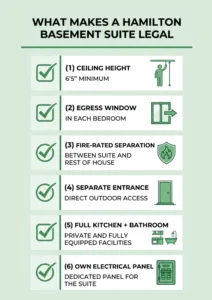
A building permit without exception.
You cannot legally rent a basement suite in Hamilton without a building permit.
A basement that someone is renting informally without permits, without inspections is not a legal suite. It is a liability at resale, a risk to your insurance coverage, and a genuine safety issue for the people living there.
Hamilton’s permit process for basement suites runs through the City’s dedicated ADU team. Building permit fees for a basement suite conversion typically fall between $300 and $800 for the permit itself, plus design drawings which usually run $1,500 to $4,000 depending on the complexity of the project.
The permit review takes four to twelve weeks for a well-prepared application.
Minimum ceiling height of 6’5″.
This is the most common deal-breaker for older Hamilton basements.
The Ontario Building Code requires at least 6’5″ (1.95 meters) throughout habitable areas of the suite measured at the lowest point, which means accounting for beams, ductwork, pipes, and any mechanical systems running across the ceiling.
Many older Hamilton homes particularly those built in the 1950s and 1960s have basement ceilings that clear this easily. Homes from that era often have 7-foot ceilings or more.
But some don’t. And when a basement falls short, the options are: underpinning or slab lowering (typically $30,000 to $60,000 before any conversion work begins), or accepting that this basement isn’t viable. That’s the number that changes the financial picture entirely — which is why it’s the first thing we check on any property.
An egress window in every bedroom.
Every bedroom in a legal basement suite needs an egress window one large enough for a person to climb out of in an emergency, with a clear opening of at least 0.35 square meters and no dimension less than 380mm.
Most existing basement windows don’t meet this. Adding compliant egress windows means cutting into foundation walls, installing window wells where grade requires it, and waterproofing the openings properly.
It adds cost. It is not optional. It is a life-safety requirement.
Fire-rated separation between the suite and the rest of the house.
At minimum 30-minute fire-rated separation on walls and ceiling between the suite and the main dwelling. Fire-rated drywall. Fire-rated door if any interior connection exists between the two units.
This is the requirement that most informal basement rentals fail. A standard drywall ceiling with regular insulation does not meet it. Specific materials and assembly details are required and inspected.
A completely separate entrance.
The suite needs its own door directly to the outside completely separate from the main house entrance.
Many older Hamilton homes already have this: a side door or rear door. If one exists in the right location, adapting it is straightforward. If not, creating a new entrance adds cost and construction time.
A full kitchen, bathroom, and its own electrical subpanel.
The suite must be self-contained. Complete kitchen with plumbing. Complete bathroom. Its own electrical subpanel separate from the main house panel. Smoke and carbon monoxide detectors interconnected between both units.
These are not formalities. They are what makes the space a home rather than a storage room with a bed in it.
What It Typically Costs And What Drives the Number Up or Down
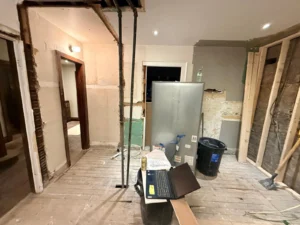
There is no one number for a basement suite conversion in Hamilton. There are variables — and knowing them upfront is the difference between a project that finishes on budget and one that doesn’t.
Conditions that keep the cost in the lower range:
The basement already has adequate ceiling height. A side or rear entrance already exists and can be adapted. The space is unfinished — no demolition of previous non-compliant work required. Water and sewer lines are positioned well for a new kitchen and bathroom. The electrical panel has capacity for a subpanel.
When these conditions are met, a complete, permitted, code-compliant basement suite in Hamilton typically runs $80,000 to $130,000.
Conditions that push the cost higher:
Ceiling height requires underpinning or slab work. A previous “finished” basement needs to be stripped back before compliant work can start. No existing entrance — a new opening needs to be created. Water infiltration history that needs to be addressed before finishing. Electrical or plumbing systems that need full replacement.
When several of these apply, costs can reach $150,000 or beyond. The conversion may still make financial sense — but at a different number. Which is why the honest starting point is always the property assessment, not the concept.
The Illegal Suite Problem, Why It Matters More Than Most People Think
A significant number of Hamilton basement rentals are informal. The space has been finished, someone is renting it, no permit was pulled, and the unit doesn’t meet code.
Homeowners in this situation often ask: does it matter if everything seems fine?
The answer is yes. Practically, not just in principle.
At resale: Buyers and their agents check permit history. An unpermitted suite either reduces the sale price — buyers factor in the cost and risk of remediation — or complicates financing entirely. Lenders don’t treat an illegal suite as income-producing for qualification purposes.
Insurance: Most homeowner policies don’t cover claims related to an unregistered rental unit. A fire, a flood, a tenant injury — the insurer may deny the claim. That is not a theoretical risk.
Enforcement: Hamilton enforces its bylaws. A neighbor complaint, a tenant dispute, a routine check any of these can trigger an order to vacate and remediate. Dealing with it that way costs far more than addressing it proactively.
Safety: Egress windows, fire separation, interconnected alarms these requirements exist because basement fires are deadly without proper exits and early warning. Legal is not just a paperwork status. It is safer.
If you have an informal basement rental, the right path is legalization working through the City’s permit process to bring the unit up to code. It is Gateway Group’s most common project type. And as a Tarion-registered home builder, our legalization projects come with the same warranty protection as any new construction we undertake.
The City of Hamilton’s ADU and Multi-Plex Housing Incentive Program
As of October 9, 2025, the City of Hamilton updated this program, raising the grant to 70% of eligible construction costs, to a maximum of $40,000 per unit.
Think of it as two payments. The first up to $8,000 is based on your contractor’s cost estimate and arrives when your building permit is approved. The second is based on your actual construction costs and is paid when your occupancy permit is issued. Together, both payments add up to a maximum of $40,000.
A permit fee rebate of up to $2,000 per building permit is also available on top of this.
To qualify, your building permit must have been issued on or after October 9, 2025, and your occupancy permit must be obtained by August 4, 2027.
Full program details are available directly from the City of Hamilton: Additional Dwelling Unit and Multi-Plex Housing Incentive Program →
For a complete breakdown of eligibility, qualifying costs, and how to apply, see our detailed guide: Hamilton’s $40,000 ADU Grant Explained →
Five Things to Check Before You Spend a Cent
If you’re seriously considering a basement conversion, this is the sequence that prevents the most expensive mistakes.
-
Ceiling height, measure it yourself right now.
Stand in the lowest point of your basement. Find the spot where beams, pipes, or ductwork sit closest to the floor. That is your number. If it’s above 6’5″, you’re in range. If it’s below that, the first question is what bringing it up to code would involve and cost — and whether that changes the financial case entirely.
-
Entrance options.
Walk the outside of the house. Is there a side door? Rear door? Bulkhead? An existing entrance that can be adapted keeps costs lower. No existing access means a new opening needs to be created — factor that in from the start.
-
Water and moisture history.
Has the basement ever taken water? After heavy rain, spring melt, along the base of foundation walls? A basement with a water history cannot be converted until the problem is properly solved not painted over, not covered up. Finishing over a wet basement creates a far worse situation for a tenant, and for you.
-
Your zoning designation.
Most Hamilton residential lots permit ADUs under the 2021 rules. The exception is properties within the Niagara Escarpment Plan area, which requires approval from the Niagara Escarpment Commission before the City can issue a building permit. Check your designation on Hamilton’s online mapping portal. Ten minutes. Before spending anything.
-
Your honest budget.
Not the budget you hope the project costs. The one that includes permit fees and drawings, a realistic construction estimate from someone who has built suites specifically in Hamilton, a waterproofing contingency if there is any moisture history, and a buffer for what comes up inside older walls. A project that works financially at $100,000 may not work at $160,000. Know your number first.
The checklist tells you what to look for. It doesn’t tell you what your specific basement, on your specific lot, with your specific zoning actually qualifies for.
That’s a different conversation and it’s one Gateway has with Hamilton homeowners every week.
Gateway offers a free property feasibility assessment for Hamilton homeowners considering a basement suite conversion. You get a straight answer on ceiling height, entrance options, moisture, zoning, and realistic project costs before you commit to anything.
See how legal basement suite conversions work in Hamilton →
What This Looks Like on an Actual Hamilton Property
Two homeowners. Same East Hamilton neighborhood. Different basements.
Homeowner A a 1962 bungalow in Crown Point. Basement ceiling is 7’1″. A side door already exists. No moisture issues. Unfinished concrete floor. Newer electrical panel.
This is a clean project. Design drawings, permit application, qualified contractor. A complete legal suite, properly permit. From first conversation to a tenant in the unit: six to nine months, with permit review being the variable part.
Homeowner B — a similar house two streets over. Basement was “finished” about fifteen years ago. Drop ceiling brings the height to 5’11”. There is water staining along one wall that was painted over at some point.
This is a different project entirely. The old finishing comes out first. The moisture issue gets assessed and addressed before anything else. The ceiling height needs a proper evaluation of what’s possible and what it costs. The project might still make sense but not at the same number, not on the same timeline, and not without that assessment happening first.
Same neighborhood. Different property. Different project.
This is why the assessment always comes before the commitment.
Why Working With a Tarion Registered Builder Changes the Risk Equation
Most of the fear around basement conversions comes from two things: projects that go over budget, and projects that end up not being legal after all the money was spent.
Both of those outcomes are primarily a contractor problem, not a regulatory one.
Gateway Group is a Tarion-registered home builder. That registration is not a marketing credential. It is a legal requirement for builders who undertake new home construction and major residential conversions in Ontario.
What it means for you: your project is covered under Ontario’s new home warranty program. If something goes wrong defects in workmanship, structural issues, code non-compliance, you have recourse that is legally enforceable, not just a promise from a contractor.
The reason our clients feel confident moving forward is that Gateway is a Tarion-registered home builder your project is legally warrantied.
That is not the case with every contractor offering to build basement suites in Hamilton. It should be a baseline question you ask before signing anything.
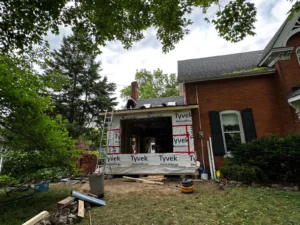
The First Step Is Knowing If Your Property Qualifies
Most Hamilton homeowners who have thought about this and done nothing are not lazy or indifferent.
They are waiting for a clear, honest answer to one question:
Does my specific property actually support this?
Not “does this make sense in Hamilton in general?” Not “could a basement suite work somewhere?” But: this house, this basement, this lot does it qualify, and does the financial case hold?
That is a question that gets answered by looking at the property. Not by reading more articles.
Talk to Gateway, Get the Honest Answer
Gateway Group is a Tarion-registered home builder specializing in basement suite conversions, multi-unit conversions, garden suites, and infill development across Hamilton.
We check the ceiling height. The entrance situation. The moisture. The zoning. The servicing. We give you a direct, honest assessment of what the property supports, what it is realistically going to cost, and whether the project makes financial sense.
If it does you will know clearly before you commit to anything.
If it doesn’t we will tell you that, and explain why. That answer protects you from spending money on something that was never going to work.
The first step is knowing if your property actually qualifies.
DM us your address we’ll give you the honest answer in 24 hours.