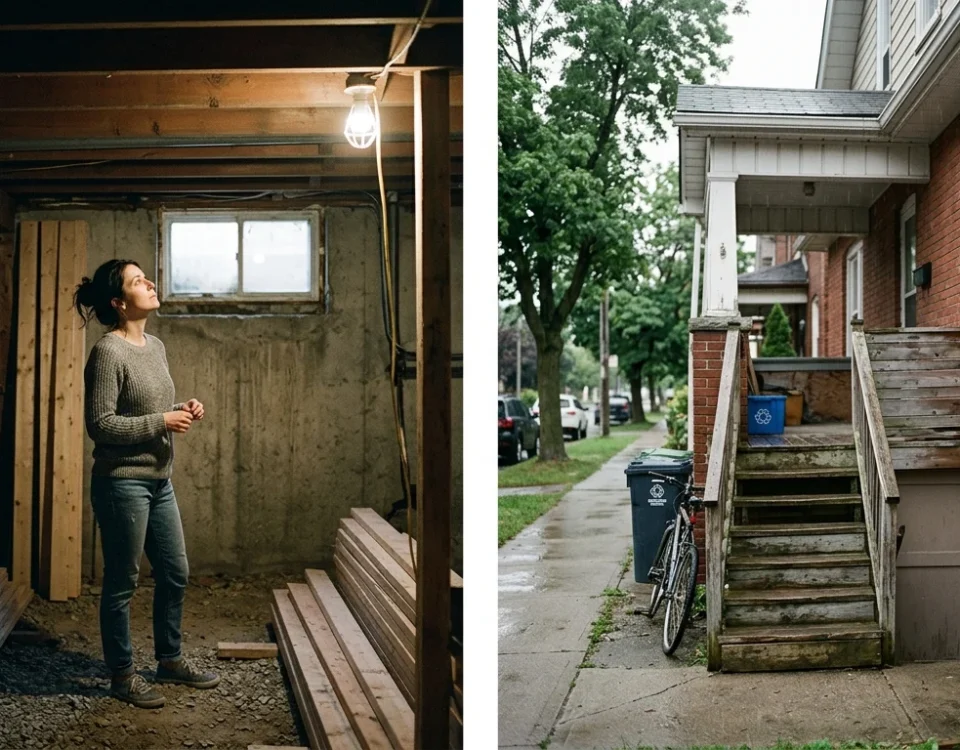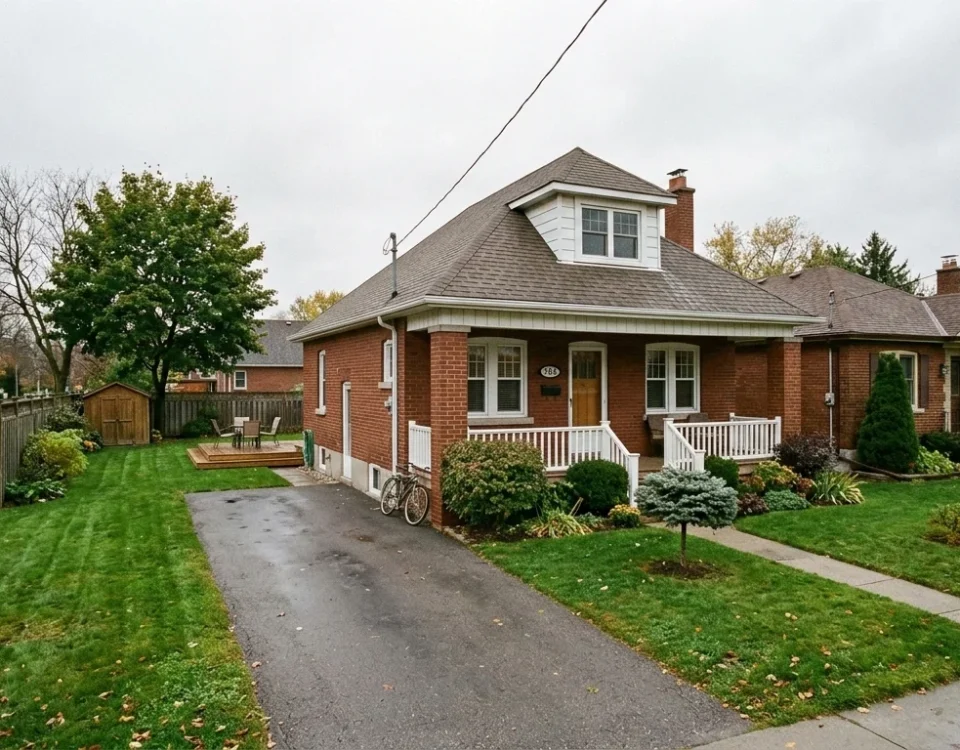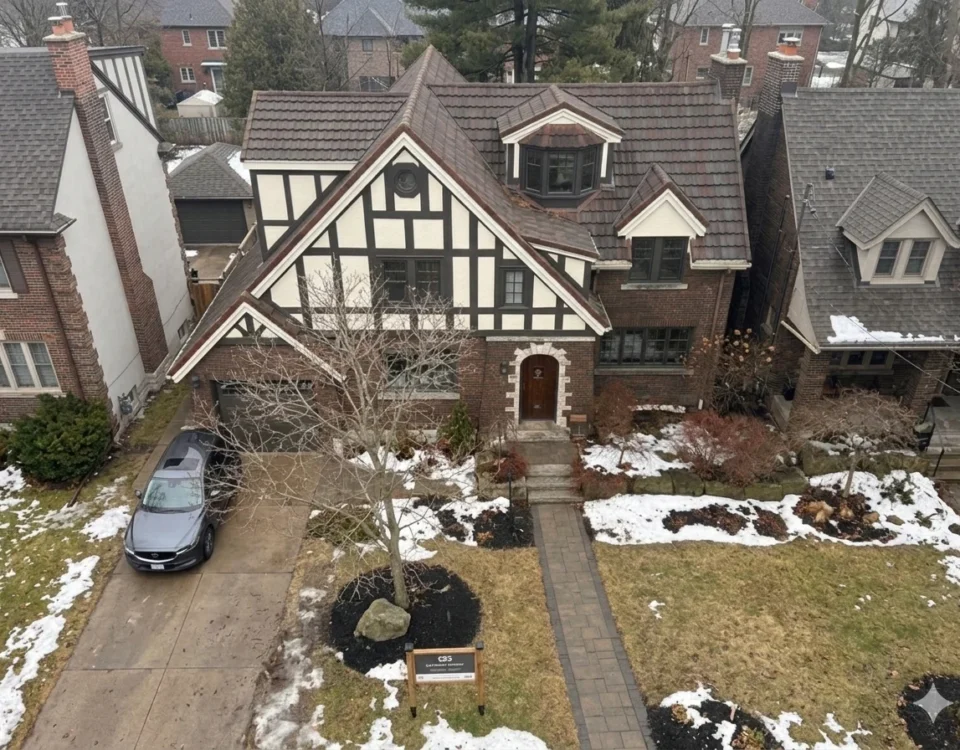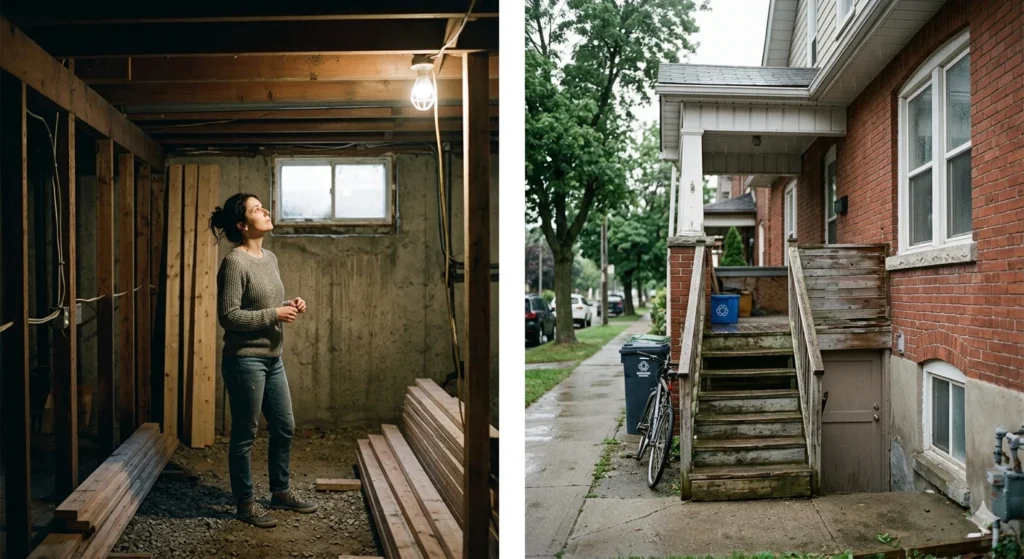
Why Hamilton Homeowners Are Finally Turning Basements Into Income Properties And What Stops Most of Them
30 March 2026
How to Find a Legitimate Home Builder in Hamilton(And Why It Matters More Than Price)
22 April 2026
|
Your property taxes just went up 5.8%. Your mortgage renewal is coming. And you’ve been sitting on a basement or a backyard that’s been doing nothing for years.
Then you hear about a $40,000 grant from the City of Hamilton for adding a legal suite.
So you Google it. And you find a mess. Some pages say $25,000. Some say $80,000. One says the program closed. None of them agree on what the money actually covers or whether your property even qualifies.
Here’s the honest picture, current as of April 2026, based on the City of Hamilton’s official program documentation updated under the Housing Sustainability Investment Roadmap in October 2025.
We’re Gateway Group. We’re a Tarion-registered builder based in Hamilton. We’ve been building legal basement suites, duplexes, triplexes, and fourplexes here for over 12 years. We’re not going to oversell this program and we’re not going to bury the details that matter. This is the guide we’d want to read if we were in your position.
What Is the Hamilton ADU Grant? (And Why There’s So Much Confusion About It)
The grant exists because Hamilton needs more rental units, and the fastest way to build them is on land that’s already serviced meaning existing residential lots where someone like you already owns the property.
Here’s why the numbers you find online are all over the place. The program has been updated multiple times since it launched. Older blog posts reference $25,000 figures (the previous forgivable loan structure). Some pages reference $80,000 (an older pilot program under different criteria). None of those figures are wrong they just reflect different versions of the program at different points in time.
|
If a contractor or website is quoting you $25,000 or $80,000 for this program without noting the October 2025 update, the information is outdated. The $40,000 figure and the eligibility criteria that come with it is what’s in effect for projects permitted from October 9, 2025 through the August 4, 2027 occupancy deadline.
What the $40,000 Actually Covers
This matters more than the headline number. A grant that only covers some of your costs is very different from one that covers all of them. And the Hamilton program has specific rules about what qualifies as an ‘eligible cost.’
Under the updated October 2025 structure, the single $40,000 grant covers three categories of cost rolled into one application:
- Design fees: your architectural drawings, BCIN stamped plans, engineering if required
- City permit fees: your building permit application costs (rebated as part of the grant)
- Construction and materials: the actual hard costs of building the unit
That combination matters. Previously, some Hamilton programs split design and permit costs from construction costs, or capped them separately. The updated structure makes this simpler: one application, one grant, three cost categories covered under the same 70% formula.
To be specific about the math: if your total eligible project costs are $57,000, the grant covers 70% of that, which is $39,900 — just under the $40,000 cap. If your project costs $80,000, the grant still caps at $40,000 (70% of $57,143). The formula is 70% of costs up to a maximum of $40,000 per unit.
| What ‘Eligible Costs’ Usually Includes
Construction materials and labor. Plumbing and electrical work for the new unit. Architectural and engineering fees specific to the ADU. Building permit fees. What’s typically not included: landscaping, non-structural cosmetic finishes, costs associated with the main dwelling rather than the new unit, or costs incurred before the permit is issued. |
How the Payment Actually Works
The $40,000 doesn’t come as a single cheque. The grant is structured in two payments, and the timing matters for how you manage your project finances.
Stage 1 First Advance (before construction): 20% of the total estimated grant amount, to a maximum of $8,000 per unit. This is calculated on your contractor’s estimate of total eligible costs (20% of 70% of the estimate). So if a Tarion-registered builder like Gateway quotes $57,000 in eligible construction costs, your first advance would be approximately $8,000.
Stage 2 Final Payment (after occupancy): The remaining balance, confirmed against your actual documented eligible costs. This is the larger portion typically $30,000–$32,000 depending on your actual costs versus the estimate.
The practical implication: you need financing or savings to cover construction costs up front. The first advance helps, but it won’t cover a full basement conversion on its own. Most homeowners use a HELOC, a construction loan, or savings for the build and treat the grant as a significant cost recovery after the fact. Your lender needs to know this structure before you start, not after.
| If You’re Working With an Investor Lens
The ROI math shifts meaningfully with this grant. A basement conversion in Hamilton typically costs $60,000–$100,000 fully permitted. At $1,500–$1,800/month in current Hamilton rental rates, payback without the grant is 4–6 years. With a $40,000 grant offset, payback on a mid-range project drops to 2–3 years. That changes the investment calculus significantly. |
Who Qualifies: The Eligibility Rules in Plain Language
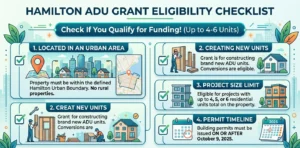
Location Requirement
Your property must be in Hamilton’s Urban Area, within the Housing for Hamilton Community Improvement Project Area (HHCIPA). Most Hamilton urban properties qualify. The notable exception is Sub-Area 2 — Roxborough, which has specific rules that may exclude some properties. If your property is in an outer rural area, you’ll need to confirm with the City.
Practical check: If your address is in Hamilton proper the Mountain, the lower city, Stoney Creek, Dundas, Ancaster, Waterdown, or Flamborough urban areas there’s a strong chance you’re within the HHCIPA. The City has a map on their website. We can also run a quick zoning check if you share your address with us.
Project Type Requirement
You must be creating a NEW Additional Dwelling Unit (ADU). The grant applies to:
- Basement suites (internal ADU): the most common type
- Garden suites (detached ADU): a separate unit in your backyard
- Addition-based suites: expanding the building to create a new unit
- Small multiplexes: converting a single-family home into a duplex, triplex, or fourplex
You cannot use this grant to renovate an existing, already-legal suite. It applies to net new units only.
Scale Requirement
The grant applies to properties with up to 4 units total. In specific high-density zones, projects creating up to 6 units are eligible. If you’re converting a single-family home to a duplex, adding a garden suite to a single-family home, or building a small multiplex from scratch, you’re in the right range.
Large apartment buildings 7 units or more are covered under a separate City program. This program is for small-scale residential density.
Permit Timing Requirement
This is the hard deadline that creates urgency. Your building permit must have been issued by the City of Hamilton on or after October 9, 2025. Projects with older permits don’t qualify for the updated $40,000 amount.
The occupancy deadline is August 4, 2027. If your project isn’t receiving occupancy by that date, you may not qualify for the full grant. This isn’t a soft guideline. it’s a program condition.
| What This Timeline Means Right Now
If you start the feasibility and design process in April or May 2026, a well-managed project can realistically receive a building permit by summer 2026 and achieve occupancy well before the August 2027 deadline. But every month of delay compresses that window. Projects that start in late 2026 run real risk of not completing in time. |
Zoning and Building Code Compliance
The unit must be legal meaning it passes both zoning review and building inspection. Hamilton’s 2021 zoning updates made most detached residential properties eligible for at least one additional unit without rezoning. But ‘eligible in zoning’ doesn’t mean every property will work. Ceiling heights, egress requirements, fire separation, and servicing are all site-specific factors that determine whether a given property actually qualifies for a permitted unit.
We run feasibility assessments before design starts specifically to catch these issues early rather than after you’ve spent money on drawings.
Ready to Check If Your Property Qualifies? Here’s What That Actually Looks Like.
If you’ve read this far and your property is in Hamilton’s urban area, you’re adding a new unit, and your permit isn’t issued yet, there’s a good chance you’re eligible.
The fastest way to confirm isn’t more Googling. It’s a 20-minute call.
Here’s what happens when you book a consultation with Gateway:
- We check your address against Hamilton’s HHCIPA boundary, takes about two minutes.
- We ask you four questions about your basement or backyard that tell us whether the physical build is viable before you spend anything on drawings.
- We tell you honestly what the project would cost, what the grant covers, and what your actual out-of-pocket number looks like.
- If it doesn’t pencil out for your situation, we’ll tell you that too.
Just a straight answer from a builder who’s done this 12 years in Hamilton.
The August 4, 2027 occupancy deadline is fixed. Projects starting design in late 2026 are cutting it close. If you’re considering this, the right time to find out is now.
How to Actually Get the Grant: Step by Step
The City’s process isn’t complicated, but it has a specific sequence. Skipping steps or doing them out of order creates delays that can affect your occupancy timeline.
- Confirm your property is in the eligible area. Use the City’s HHCIPA map, or contact us with your address and we’ll check for you.
- Run a zoning and feasibility check. Before you commission any drawings, you need to know what your property can actually support — basement suite, garden suite, or full conversion. This is the step most people skip and most regret.
- Get a BCIN Stamped Design. The City requires an Ontario Building Code-compliant set of drawings stamped by a BCIN-qualified designer. This is not optional and it can’t be done by someone without the designation. At Gateway, our design process is integrated with construction we don’t hand you drawings and disappear.
- Apply for your Building Permit. The permit application goes to the City with your stamped drawings. Permit timeline in Hamilton varies — currently 4–8 weeks for residential ADU projects, longer for more complex conversions. Your permit must be issued on or after October 9, 2025 to be eligible for the $40,000 grant.
- Apply for the Grant. The grant application is submitted with your permit. The City reviews your contractor’s cost estimate and issues the first advance before construction begins.
- Build the unit. Construction proceeds under permit, with inspections at required stages. Your builder must be coordinating with the City’s inspection schedule missed inspections can delay occupancy.
- Receive Final Occupancy and Final Grant Payment. Once the City issues your occupancy permit, you submit documentation of actual eligible costs and receive the remaining grant balance. Occupancy must be received by August 4, 2027.
Why Working With a Tarion-Registered Builder Matters for Your Grant
The grant doesn’t legally require you to use a Tarion-registered builder. But there are practical reasons why it matters, especially for grant eligibility.
The grant application requires a qualified contractor’s estimate for eligible costs. It requires building permit compliance at every stage. It requires occupancy by a specific date. And it requires the final documentation of actual costs to match your application.
The risk in a project like this isn’t the grant application, it’s the project execution. The most common reasons Hamilton homeowners lose out on grant funding aren’t eligibility issues at the start. They’re projects that run over budget, miss permit inspections, fail occupancy requirements, or get handed back to the homeowner half-finished.
Tarion registration means your builder has passed Ontario’s builder licensing requirements, maintains a warranty program, and is accountable to a regulatory body. It doesn’t guarantee a perfect project. But it filters out a category of risk that costs Hamilton homeowners thousands every year, unlicensed contractors who take deposits and disappear, or who build suites that don’t pass inspection.
Gateway Group has been Tarion-registered since our founding in 2014. We hold the WEHBA Award of Distinction 2025. Charles Wah, our founder, sits on Hamilton’s Missing Middle and Infill Subcommittee the same body that shapes the housing policy context this grant operates in. We don’t mention this to list credentials. We mention it because if you’re about to navigate a City grant program and a permitted construction project simultaneously, you want a builder who understands both sides of that process from the inside.
What Hamilton Homeowners Get Wrong About This Grant
After years of building legal suites in Hamilton, we hear the same mistakes repeatedly. Here are the ones that cost the most:
Assuming Zoning Approval Means the Project Will Work
Hamilton’s 2021 zoning update allows most residential properties to add an ADU without rezoning. But ‘allowed by zoning’ and ‘physically possible’ are different questions. Ceiling heights under 6’5″ in a basement may not meet Building Code minimums. A property without a viable egress window location may require structural changes. A lot without adequate servicing may need upgrades before a permit is issued. None of this shows up in a zoning search it shows up during a proper site assessment.
Starting Design Without Confirming Eligibility
We’ve had homeowners come to us after spending on drawings from a designer who didn’t flag that their property was in a boundary-excluded area, or that their basement suite would require a ceiling modification the drawings didn’t account for. A feasibility call before design starts costs nothing. Redoing drawings after the fact costs real money.
Treating the Grant as Guaranteed Income Before the Permit Is Issued
Until your permit is in hand and the grant application is submitted, the money isn’t yours. Don’t sign a construction contract contingent on grant funding that hasn’t been approved. Work with your builder and lender to ensure the project is financially viable without the grant then treat the grant as cost recovery, not pre-financing.
Using a Non-Permitted Contractor to Save Money
The City of Hamilton is actively enforcing unpermitted construction. A basement suite built without a permit doesn’t qualify for the grant. It can’t be legally rented. It can affect your insurance and resale value. And if a tenant is injured in an unpermitted unit, the legal exposure falls on you entirely. The short-term saving on contractor costs is not worth any of that.
Frequently Asked Questions
Q: Does my Hamilton property qualify for the $40,000 grant?
Your property needs to be in Hamilton’s Urban Area within the HHCIPA boundary (excluding Roxborough Sub-Area 2), you need to be adding a net new ADU of up to 4 units (or 6 in specific zones), and your building permit needs to be issued on or after October 9, 2025. The fastest way to find out is to share your address with us — we’ll give you an honest answer, not a sales pitch.
Q: Can I get the grant for converting my basement to a rental apartment?
Yes — an internal basement suite is one of the primary project types the program is designed for. As long as the unit is newly created (not a renovation of an already-legal suite), meets Hamilton Building Code requirements for minimum ceiling height, egress, and fire separation, and the permit is issued after October 9, 2025, you should be eligible.
Q: What’s the difference between a forgivable loan and a grant?
Under the current October 2025 structure, the $40,000 is structured as a grant not a forgivable loan for eligible projects. Earlier versions of the program used forgivable loan structures with 15-year affordability conditions. The updated HSIR program has simplified this, but you should confirm current terms with the City of Hamilton Housing Secretariat directly or at the time of your application, as program conditions can change.
Q: Can I apply for the grant myself, or do I need a builder to do it?
The grant application is submitted by the property owner. Your builder provides the cost estimate documentation used in the application. But navigating the permit application and grant submission simultaneously is where most homeowners run into problems particularly around making sure the cost categories in your estimate align with the City’s definition of ‘eligible costs.’ We help our clients through this as part of the project.
Q: How long does it take to receive the first grant payment?
The first advance is issued after your permit is approved and grant application is submitted. Based on current City processing timelines, that typically means 4–8 weeks after permit submission. The final payment comes after occupancy is achieved and final cost documentation is submitted.
Q: What if my project costs are less than $57,143 do I get less than $40,000?
Yes. The grant is 70% of your eligible costs, to a maximum of $40,000. If your eligible project costs total $50,000, you receive $35,000. The $40,000 cap is reached only when eligible costs reach approximately $57,143 or more.
Q: Can I stack the Hamilton ADU grant with other programs?
This depends on the specific programs. The Hamilton ADU grant has been stackable with certain CMHC financing products like MLI Select in some scenarios. The Ontario Renovates Secondary Suites Forgivable Loan Program is a separate program with different eligibility criteria in some cases, homeowners have accessed both. You should confirm stacking eligibility with each program administrator, as rules can change.
Q: I’m a real estate investor, not a homeowner. Can I still access the grant?
The program criteria don’t restrict eligibility to owner-occupants — they focus on the type of project and location. However, some provisions around affordability conditions and rental requirements may affect how the grant interacts with an investment project. If you’re purchasing a property specifically to convert it, the permit timing (issued after October 9, 2025) and occupancy deadline (August 4, 2027) are the key constraints to underwrite against. We’ve worked with Hamilton investors on multi-unit conversions and can walk through what this looks like for your specific situation.
Q: What happens if my project doesn’t achieve occupancy by August 4, 2027?
This is the deadline the City has set for the current program iteration. Projects that miss occupancy may not qualify for the final grant payment. This is why timeline discipline matters from day one a project that starts design in mid-2026 is running against a tight window. If you’re reading this in spring or summer 2026, the time to act is now, not after your September vacation.
Q: Does the grant cover garden suite (backyard cottage) projects?
Yes. Detached Additional Dwelling Units commonly called garden suites or laneway homes — are explicitly listed as an eligible project type. Hamilton’s zoning allows one detached ADU on lots with single-detached, semi-detached, or townhouse dwellings, with a maximum gross floor area of 75 square meters and no more than two bedrooms.
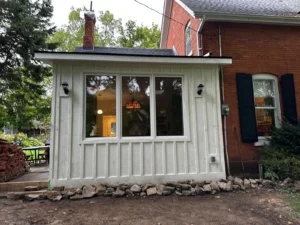
What’s the Next Step If You’re Seriously Considering This?
You’ve read the guide. You know what the grant covers. You have a rough sense of whether your property might qualify.
The one thing this article can’t do is tell you whether your specific property, your basement height, your lot, your existing servicing, actually works for a permitted build that qualifies for the $40,000.
That’s what the consultation is for.
Book a free 20-minute call with Gateway +1 343-504-8213 Here’s exactly what we cover:
- Your address run against the HHCIPA grant boundary
- A quick read on whether your property has physical barriers that would complicate or rule out the build
- A realistic cost range for your project type: basement suite, garden suite, or full conversion
- What the grant timeline looks like for your situation given the August 2027 deadline
- Honest guidance on whether this makes financial sense for you including if it doesn’t
Gateway Group is Tarion-registered, WEHBA Award of Distinction 2025, and has been building legal suites and multi-unit conversions in Hamilton since 2014. Charles Wah, our founder, sits on Hamilton’s Missing Middle and Infill Subcommittee, the same body that helped shape the grant program you’re reading about.
There’s no fee for the call. No obligation to proceed.
If it’s a fit, we move forward. If it’s not, you walk away knowing exactly why and that’s still worth something.
About Gateway Group
Gateway Group is a Tarion-registered home builder based in Hamilton, Ontario. Founded in 2014 by Charles Wah, we specialize in legal basement suite conversions, garden suites, duplex and fourplex infill development, and design-build construction across Hamilton and the surrounding area. Charles sits on Hamilton’s Missing Middle and Infill Development Subcommittee at the West End Home Builders’ Association, where he helps shape the policy environment that programs like the Housing Accelerator Fund ADU grant operate within. We hold the WEHBA Award of Distinction 2025 and maintain a 4.9 Google rating built on 12 years of Hamilton projects.
If you’re a Hamilton homeowner or investor thinking about adding a legal suite and wondering how the $40,000 grant fits your situation
DM us your address we’ll give you the honest answer in 24 hours.