Before You Commit to a Multi-Unit Build in Hamilton, Read This
16 January 2026
Hamilton Legal Basement Apartment & Multi-Unit Conversion, What Gets Approved?
7 February 2026
Hamilton’s real estate market is buzzing with talk of infill and intensification. Developers, investors and house‑hackers all want to buy under‑utilized lots and add suites, garden suites or small multifamily buildings. On paper it looks like a no‑brainer buy a house or small building, add units and collect higher rents.
But the riskiest moment is before closing, when spreadsheets treat assumptions as facts. In Hamilton, a deal can look perfect and still fail because the City won’t approve what you think it will. Long approval timelines and hidden site constraints can turn an infill opportunity into a money pit.
This article provides a three‑check framework for Hamilton infill deals. It’s written from the buyer’s perspective and grounded in local regulations, real‑world timelines and due‑diligence best practices.

1 What Will the City Approve on This Lot?
The first check is about regulatory feasibility. The City of Hamilton’s zoning by‑law and Ontario’s provincial rules determine what you can legally build. There is no universal “unit count”; each lot has unique permissions and constraints. Here’s how to verify what will be allowed:
Understand the zoning and permitted uses
- Identify the base zone and overlays. Hamilton uses Zoning By‑law 05‑200. The by‑law includes general provisions, parking regulations and zone‑specific rules. For any proposed development, confirm that the site’s zone allows multiple units, secondary suites and/or garden suites. A professional planner or architect can help interpret the by‑law.
- Additional Dwelling Units (ADUs). Hamilton’s April 2024 ADU by‑law allows single‑detached homes to have two internal ADUs and one detached ADU, while duplexes can have one internal ADU and one detached ADU. The Province’s draft regulation proposes up to three ADUs as‑of‑right on residential lots, but Hamilton’s existing rules are already permissive.
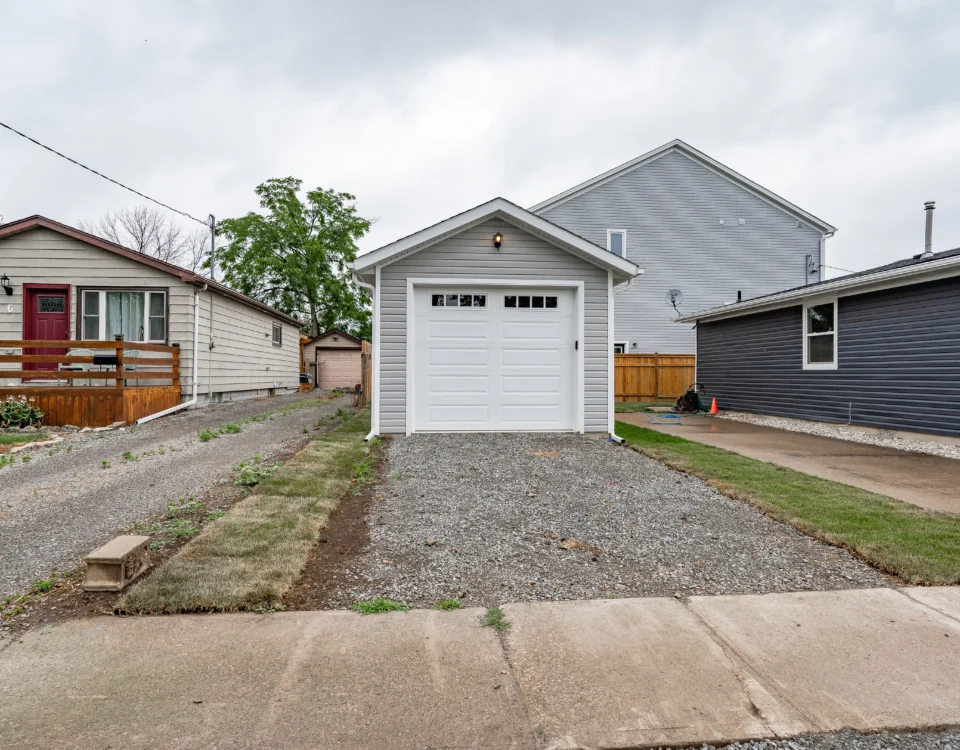
- Separation and coverage. Hamilton’s zoning requires 5 metres separation between a principal dwelling and a detached ADU. Garden suites can be up to 75 m² in area with a maximum lot coverage of 25 %, must have 7.5 m separation from the main house and 1.2 m side and rear setbacks, and cannot exceed 6 m in height. Only one garden suite per lot is allowed. No additional parking is required for an ADU. These dimensional requirements determine whether a backyard can physically host an additional unit.
Ask “What will the City approve?”

- Formal consultation. The City offers a formal consultation It is not mandatory, but it helps identify key issues and confirms submission requirements. You’ll receive feedback on zoning compliance and any special overlays such as heritage or conservation areas.
- Secondary suites, duplexes & small multifamily. Zoning may allow secondary suites, duplex or triplex conversions, or small multifamily buildings. Each has specific parking, access and fire‑protection requirements. For example, accessible parking requirements do not apply to single‑detached, duplex, triplex and fourplex dwellings.
- Heritage and special overlays. Some areas have heritage designations or site‑specific bylaws. A heritage overlay can limit exterior alterations and require additional approvals. Checking the property’s status with the City’s planning division prevents surprises during permitting.
User‑first takeaway: Don’t ask “How many units can I add?” Ask “What will the City approve on this lot, with this plan?” This mental shift protects your upside and positions you as a savvy operator when speaking to partners, lenders and designers.
2 Do Site Constraints Make the Plan Impossible or Expensive?
Even if zoning permits additional units, the physical realities of a lot can derail your plan. Investors often focus on purchase price and renovation costs, but neglect to analyse setbacks, parking, grading and servicing. Before you waive conditions, evaluate these site constraints:
Setbacks, envelope and lot coverage

- Building separation and setbacks. Hamilton’s garden suite guidelines require a 5 m separation between the primary dwelling and an ADU, with 1.2 m side and rear setbacks. If your lot depth is limited, meeting these distances may be impossible without variances. Corner lots or irregular shapes may have additional setback requirements.
- Lot coverage and height. Detached ADUs are capped at 75 m² and 25 % of lot coverage, with a 6 m height limit. Oversized ADUs or multi‑storey additions may require variances or site plan approval.
Parking and access
- Parking requirements. Hamilton’s ADU rules do not require additional parking. However, duplexes and triplexes may have minimum parking ratios under the Zoning By‑law. The City’s Section 5 Parking regulations exempt single‑detached, semi‑detached, duplex, triplex and fourplex dwellings from accessible parking requirements, but standard parking ratios still apply. Ensure there is space for driveways and manoeuvring without sacrificing landscaped areas.
- Access and egress. For secondary suites, you must provide safe egress routes, fire separations and head‑room clearances to meet the Ontario Building Code. Laneway and garden suites require clear access for emergency services. Narrow side yards or mature trees can hinder fire‑truck access and may trigger additional costs (e.g., tree protection or removal).
Utilities and servicing
- Servicing constraints. Verify whether the existing sewer, water and electrical services can support additional units. Upgrading services can be expensive and require road cuts or easements.
- Site grading and drainage. Adding a unit may change drainage patterns. You may need grading plans, stormwater management or retaining walls to protect neighbouring properties. A civil engineer or surveyor can identify these issues early.
User‑first takeaway: If the site cannot physically support your plan, zoning permissions don’t matter. Spending a few hours on site measurements and professional consultations can save months of headaches later.
3 Will Timelines and Approvals Break the Deal Economics?
The final check focuses on time and cost. Even if your plan is legal and physically possible, approvals and construction timelines can erode your profit. Hamilton is notorious for long planning approvals.
Understand the approval process and timelines
- Site plan control timeline. According to the City, the site plan control process typically takes four to six weeks from application submission to receiving conditional approval. Final approval depends on the complexity of the project and how quickly you satisfy pre‑permit conditions.
- Planning approvals can take years. A 2025 Canadian Home Builders’ Association (CHBA) study ranked Hamilton as having the worst planning application processing times in Canada. The study found that getting a planning application approved in Hamilton takes an average of 31 months, almost triple the 11.2‑month average across other. The report noted that approval times in Hamilton have increased by 8.1 months since 2022, the largest increase in Canada thepublicrecord.ca. Such delays can drastically increase carrying costs and expose you to interest rate resets.
- Provincial changes. The provincial government plans to allow up to three additional dwelling units as-of-right in urban areas. While Hamilton’s zoning already allows multiple ADUs, provincial pressure may accelerate approvals or override local controls. Staying informed helps you anticipate changes in process or fees.
Model your holding costs and timeline risks
- Carrying costs. Long approvals mean you will be holding vacant or under‑used property for months or years. Factor in mortgage payments, property taxes, insurance and maintenance. Private loans with rate resets can shrink margins if delays push you past initial terms.
- Financing draw schedules. Lenders release funds at milestones such as permit issuance, framing inspection or occupancy. Delays in approvals can postpone draws, forcing you to finance construction from equity or costly bridge loans.
- Partner and investor expectations. JV partners and private lenders expect timelines and returns. A clear understanding of approval timelines helps you communicate realistically and maintain trust.
User‑first takeaway: A deal can be “approved eventually” and still be a bad deal if the timeline erases your margin. Plan for contingencies, structure flexible financing and consider walking away if the timeline risk is too high.
Practical Due‑Diligence Steps
Beyond the three checks, successful infill investors follow a repeatable due‑diligence process. Here are key actions inspired by Ontario real‑estate lawyers and industry best practices:
- Review zoning bylaws and regulations. The buyer should confirm that the property’s zoning allows the intended use, including building heights, parking and lot coverage. Municipal zoning bylaws govern land use and development; failing to comply can lead to injunctions and enforcement actions.
- Conduct environmental assessments. Environmental site assessments identify soil or groundwater contamination. Ontario case law shows that failure to discover contamination during due diligence can lead to lawsuits and cleanup costs.
- Search title and permits. A title search reveals ownership, liens and open building permits. Open permits create title defects and can justify terminating the purchase agreement.
- Engage professionals. Work with a planner, architect and real‑estate lawyer. Their expertise helps you interpret bylaws, design to meet setbacks and navigate approvals.
What to Do Next
If you’re evaluating a Hamilton infill deal and the upside depends on adding units, you don’t need more optimism you need a clear screen before you waive conditions. Gateway Group helps investors assess approval likelihood, site constraints and timeline risk so they can decide with clarity before closing.
Contact Gateway Group for a feasibility screen that covers:
- Zoning and approval likelihood. We confirm what the City is likely to approve and identify any required variances.
- Site constraints analysis. We assess setbacks, parking, access, grading and servicing to ensure your plan is physically feasible.
- Timeline and economic modelling. We estimate approval timelines and carrying costs so you can model returns and decide whether to proceed.
If you want to check what’s possible on your property and convert it into a multi‑unit,
Contact Us
We’ll schedule your free property check and multi‑unit feasibility call—space is limited, so don’t wait.