Already Own in Hamilton? 5 Signs Your Property Is Underperforming
17 February 2026
Home Builders in Hamilton Ontario: Multi-Unit Conversions, Legal Suites and Infill Development
11 March 2026
Most Hamilton Homeowners Have No Idea What’s Sitting Underneath Them.
I’ve walked through properties across Hamilton where the owner was leaving serious rental potential unused and they didn’t know it yet.
Not because they weren’t smart.
Not because they weren’t motivated.
But because most of what’s written online about legal suite conversions is generic, outdated, or not specific to Hamilton.
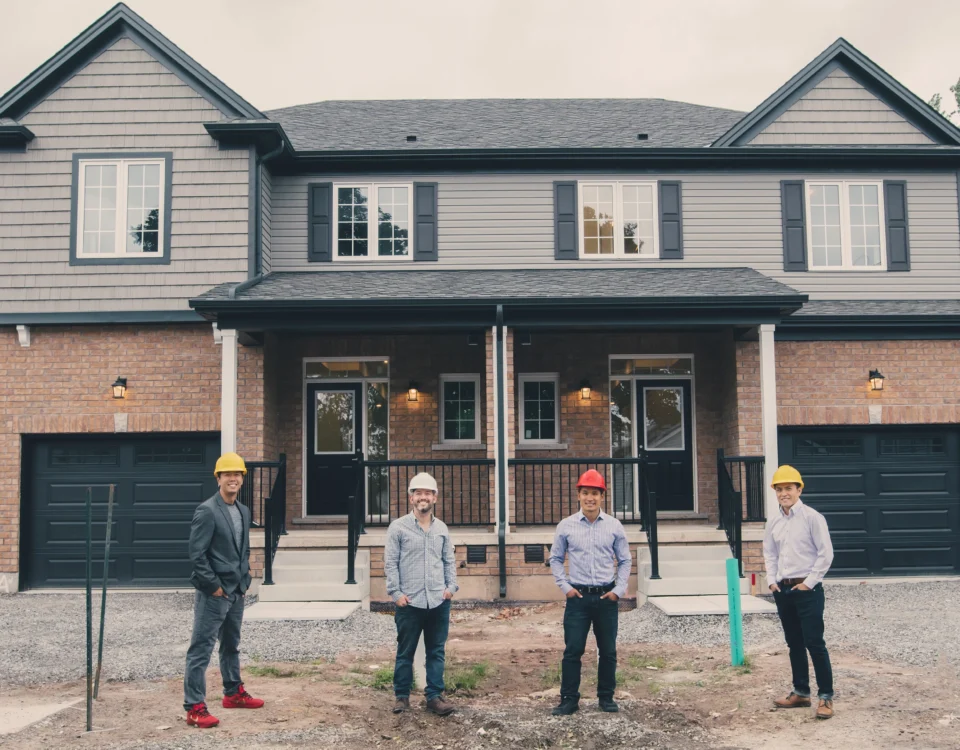
I’m Charles, founder of Gateway. I’ve been building and renovating homes across Hamilton from the Mountain to East Hamilton, Dundas, Ancaster and Stoney Creek for years. We’ve completed secondary suites, duplex conversions, and multi-unit renovations under the City of Hamilton’s zoning bylaw and building department requirements.
Here’s what we’ve actually seen.
This article will walk you through:
- What legal suite conversions involve in Hamilton
- What typically drives cost
- What rental income looks like in real local conditions
- What the zoning rules actually say
- And how to know if your property qualifies
Why More Hamilton Homeowners Are Converting to Legal Suites Right Now
Hamilton’s rental demand has changed dramatically over the last few years.
You’re seeing it in:
- Hamilton Mountain
- East Hamilton
- Stoney Creek
- Parts of West Hamilton
- Even Dundas and Ancaster in certain pockets
Young professionals, families priced out of ownership, and people relocating from the GTA are renting longer.
What this means in plain terms:
Three years ago, some properties would have required more hurdles.
Today, many secondary suites are permitted as-of-right provided you meet the rules.
What a Legal Suite Conversion Actually Involves in Hamilton
When someone says “legal basement suite,” here’s what that really means in Hamilton:
- Zoning permits the use.
- The unit meets Ontario Building Code requirements.
- You obtain permits through the City of Hamilton Building Division.
- Inspections are completed.
- The unit is compliant.
That’s it.Everything else is details.
But those details matter.
What Drives the Cost of a Legal Suite Conversion in Hamilton
Costs vary property to property. The difference is rarely finishes. It’s almost always driven by structural and compliance factors.
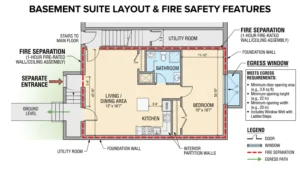
Here’s what typically determines whether a project is straightforward or complex.
1. Ceiling Height
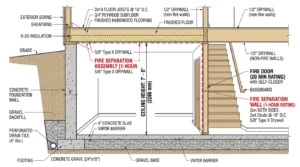
Hamilton requires minimum ceiling heights for habitable basement space. If your basement is already close to or above that threshold, the project is far simpler.
If it’s significantly below, underpinning may be required — which changes everything.
2. Separate Entrance
Some homes already have side entrances. Others require excavation and stair construction. That’s a major variable.
3. Egress and Fire Separation
Below-grade units require proper exits and fire separation between units. This is not optional. It’s life-safety.
Homes that can accommodate these without heavy structural changes move faster.
4. Electrical Capacity
Many older homes still have 100-amp service. Some projects require panel upgrades. Others do not. This depends on total load and configuration.
5. Plumbing Layout
If the basement plumbing lines up well with the existing stack, costs stay controlled. If new drainage routes are required, scope increases.
There is no “standard price” for a legal suite conversion in Hamilton.
There is only:
- property-specific evaluation
- scope clarity
- and code compliance
What Hamilton Homeowners Are Actually Earning From Legal Suites
Rental income depends on:
- Location within Hamilton
- Unit size and finish level
- Proximity to transit and amenities
- Separate utilities or shared utilities
- Parking availability
In areas like Hamilton Mountain and East Hamilton, compliant secondary suites typically rent steadily when properly finished and positioned in the market.
The important question isn’t:
“How much can I charge?”
It’s:
“Will the rental income justify the total investment over time?”
Which brings us to ROI.
Is a Legal Suite Conversion Worth It in Hamilton?
The math is simple.
If your project cost is manageable and the rental income meaningfully offsets your mortgage or increases your net cash flow, it makes sense.
If structural issues inflate costs beyond what local rental rates can reasonably support, it doesn’t.
What most online ROI calculators miss:
- Rental income reduces effective carrying costs.
- Rental expenses are deductible.
- Legal suites often increase appraised property value.
- Vacancy must be factored in.
- Compliance protects you from enforcement risk.
In our experience, when the property aligns well, the return is stable and defensible.
When the property fights the design, the numbers don’t work.
We tell people this upfront.
Hamilton Zoning Rules for Secondary Suites — What Actually Matters
Under City of Hamilton Zoning By-law 05-200 and subsequent amendments:
- Secondary suites are permitted in most residential zones.
- Additional dwelling units are allowed subject to compliance.
- Garden suites are permitted in certain contexts.
- Parking requirements apply per unit in most zones.
- Fire separation and code compliance are mandatory.
- Owner-occupancy is not universally required — but confirm zone specifics.
You apply through the City of Hamilton Building Division. Plans are reviewed for zoning compliance and Ontario Building Code standards.
Permits are not optional.

The good news?
If your property meets the checklist, approvals are procedural — not political.
Does Your Hamilton Property Qualify?
Here’s a straightforward way to evaluate your property.
Properties That Typically Qualify
- Detached homes
- Basements with compliant ceiling height
- Ability to create separate entrance
- Adequate electrical capacity
- Residential zoning that permits secondary suites
Properties That Require Closer Review
-
- Low basement ceiling height
- Tight lots with parking constraints
- Semi-detached or townhouse properties (zone-dependent)
- Heritage-designated homes
- Properties with water infiltration history
Properties That Might Work With the Right Strategy
- Lots where tandem parking may apply
- Homes where electrical upgrade unlocks feasibility
- Properties where a garden suite may be better than a basement conversion
Most owners we’ve worked with assumed they didn’t qualify.
Many did.
They just needed clarity.
How to Find Out If Your Hamilton Property Qualifies
Here’s the practical pathway.
Step 1: Measure Your Basement
Check ceiling height.
Identify window sizes.
Look at possible entrance locations.
Step 2: Check Zoning
Use the City of Hamilton zoning map. Confirm your zone. Confirm secondary suite permissions.
Step 3: Review Parking
Count usable spaces. Evaluate layout realistically.
Step 4: Get a Professional Assessment
Online checklists only go so far.
Structural, drainage, electrical, and compliance details require experienced eyes.
That’s where we come in.
If you’ve done Steps 1–3 and want a clear answer on Step 4, we’ll walk the property and give you an honest assessment of:
- What it supports
- What it would involve
- Whether it makes financial sense
Frequently Asked Questions
How much does a legal suite conversion cost in Hamilton?
Costs vary significantly based on ceiling height, entrance requirements, electrical capacity, plumbing configuration, and finish level. The only accurate estimate comes from reviewing the specific property.
Do I need a permit for a legal suite in Hamilton?
Yes. A building permit through the City of Hamilton is required for secondary dwelling units.
What is the minimum ceiling height for a legal suite in Hamilton?
Basement ceiling heights must meet Ontario Building Code requirements for habitable space. If the height is insufficient, structural work may be required.
Does Hamilton require owner-occupancy for a legal suite?
Owner-occupancy is not universally required across all zones, but zoning details should be confirmed for your specific property.
Can I build a garden suite in Hamilton?
Garden suites are permitted in certain residential contexts, subject to zoning compliance, servicing, and site constraints.
Is a legal suite a good investment in Hamilton?
It can be, when the property supports compliance without excessive structural modification and rental demand aligns with the location.
Ready to Find Out What Your Hamilton Property Could Earn?
Every property is different.
The examples in this article reflect real Hamilton conditions — but your property has its own lot size, ceiling height, zoning classification, and structural reality.
The only way to know what yours supports is to have someone who understands Hamilton’s building department, zoning bylaw, and construction realities look at it properly.
That’s what we do.
We walk the property.
We check the zoning.
We assess compliance feasibility.
We tell you honestly whether it makes sense.
It costs you nothing to find out.
Fill out the form with your address on the homepage and we’ll get back to you within 24 hours.